High-density reference
Overview Map
The major physiology, presentations, diagnostic patterns, treatment priorities, and anesthesia implications from this source document.
Main Focus
- Differentiate endocrine islet function from exocrine pancreatic digestion.
- Understand how insulin, glucagon, cortisol, epinephrine, and growth hormone switch the body between storage and mobilization.
- Relate insulin receptor tyrosine-kinase signaling to GLUT4 translocation in skeletal muscle and fat.
- Use insulin’s short half-life to predict rapid glucose change during interrupted IV infusions.
- Recognize insulin’s intracellular potassium shift as both a treatment for hyperkalemia and a risk for hypokalemia.
- Assess diabetic autonomic neuropathy, gastroparesis, nephropathy, thermoregulatory impairment, and stiff-joint airway risk.
- Plan around oral agents, non-insulin injectables, insulin categories, pumps, and procedure duration.
- Differentiate hypoglycemia, DKA, and HHS under anesthesia, where symptoms may be masked.
Presentation
- Hypoglycemia: tachycardia, diaphoresis, tremor, anxiety, confusion, dizziness, headache, seizure, or loss of consciousness.
- Long-standing diabetes: CAD, autonomic dysfunction, gastroparesis, nephropathy, neuropathy, reduced hypoxic response, and impaired thermoregulation.
- Stiff-joint syndrome: positive prayer sign with reduced cervical spine and TMJ mobility despite a reassuring Mallampati score.
- DKA: rapid onset, dehydration, fruity breath, Kussmaul respirations, abdominal pain, nausea/vomiting, ketonemia, and acidemia.
- HHS: days-to-weeks onset, extreme hyperglycemia, profound dehydration, hyperosmolarity, confusion, lethargy, or coma with minimal ketosis.
Epidemiology
- Type 1 diabetes accounts for roughly 5–10% of diabetes cases; type 2 for about 90–95%.
- The endocrine islets make up only about 2% of pancreatic mass.
- Beta cells account for roughly 60% of islet cells; alpha cells about 25%; delta cells about 10%.
- About half of long-standing type 1 diabetic patients may have restricted joint mobility in the source guide.
- HHS mortality is described as substantially higher than DKA mortality, largely because patients are older and more comorbid.
Etiology
- Type 1 diabetes: autoimmune beta-cell destruction causing absolute insulin deficiency.
- Type 2 diabetes: insulin resistance, impaired secretion, and increased hepatic glucose output.
- Pancreatogenic diabetes: chronic pancreatitis, cystic fibrosis, or resection reduce functional islet mass.
- DKA triggers: missed insulin, infection, trauma, acute illness, surgery, or SGLT2-associated euglycemic DKA.
- HHS triggers: infection, sepsis, pneumonia, stroke, myocardial infarction, poor intake, or dehydration.
- Hypoglycemia risks: insulin, sulfonylureas, meglitinides, liver disease, renal failure, gastric bypass physiology, or insulinoma.
Diagnostics
- Fasting diabetes threshold in the guide: glucose at or above 126 mg/dL.
- Long-term control: review HbA1c and recent glucose trends, but do not rely on HbA1c alone for day-of-surgery decisions.
- Hypoglycemia: glucose below 70 mg/dL; symptoms often appear between 50 and 70 mg/dL.
- DKA: hyperglycemia, ketonemia, pH below 7.3, and elevated anion gap.
- HHS: glucose often above 600 mg/dL, osmolarity above about 350 mOsm/L, severe dehydration, and minimal ketoacidosis.
- Unstable patients: arterial blood gas or central-lab glucose is more reliable than poorly perfused capillary sampling.
Treatment
- Hypoglycemia: IV dextrose when access is available, recheck in 15 minutes, and use glucagon when IV access is absent.
- DKA: isotonic fluids, potassium/electrolyte planning, insulin, and treatment of the precipitating cause.
- HHS: careful but substantial rehydration, insulin, electrolyte replacement, hemodynamic monitoring, and trigger treatment.
- Insulin pumps: may continue at basal rate for short uncomplicated procedures with frequent checks; longer procedures may require IV insulin and glucose.
- Avoid sole reliance on sliding-scale bolus insulin for major or prolonged cases.
- Use insulin plus dextrose to shift potassium intracellularly in hyperkalemia, while remembering this does not remove potassium from the body.
Pearls
- The brain cannot rapidly switch fuels during acute hypoglycemia, making it a true anesthesia emergency.
- Under general anesthesia, neuroglycopenic symptoms are hidden; unexplained tachycardia or diaphoresis should prompt a glucose check.
- Insulin’s plasma half-life is about 6 minutes, so an interrupted IV infusion can change glucose quickly.
- Glucagon requires hepatic glycogen stores and may be less effective after prolonged fasting, malnutrition, or chronic alcohol use.
- A positive prayer sign can predict difficult airway anatomy despite a normal Mallampati score.
- General anesthesia produces a stronger hyperglycemic stress response than regional anesthesia.
- NPH insulin contains protamine and may increase concern for a protamine reaction during heparin reversal.
- Perioperative medication timing should follow current local policy, especially for SGLT2 and GLP-1 drugs.
Mechanism before memorization
Pathophysiology Step-Through
Select a pathway and move one step at a time. The complete text is embedded in the initial HTML for indexing and printing.
Diabetic Ketoacidosis
Step 1
Insulin effect becomes inadequate
Absolute or severe relative insulin deficiency prevents normal glucose uptake in skeletal muscle and fat.
Counterregulatory hormones raise glucose
Glucagon, cortisol, epinephrine, and growth hormone increase glycogenolysis and gluconeogenesis.
Lipolysis drives ketogenesis
Loss of insulin’s anti-lipolytic effect releases free fatty acids, which the liver converts to ketone bodies.
Osmotic diuresis and respiratory compensation develop
Glucosuria causes dehydration and electrolyte loss, while Kussmaul respirations compensate for metabolic acidosis.
The potassium paradox appears
Serum potassium may initially be high or normal despite total-body depletion; insulin can then lower serum potassium rapidly.
Resuscitation follows a sequence
Begin fluids, assess and replace electrolytes, then titrate insulin with serial glucose, potassium, and acid-base monitoring.
Some insulin remains
Residual insulin is enough to suppress major ketogenesis but not enough to control hepatic glucose output or peripheral resistance.
Glucosuria causes massive water loss
Extreme hyperglycemia creates prolonged osmotic diuresis and a very large free-water deficit.
Hyperosmolarity injures the brain
Rising osmolarity produces confusion, lethargy, focal findings, seizures, or coma.
Older comorbidity makes resuscitation delicate
Cardiac and renal disease increase the risk of pulmonary edema during aggressive rehydration.
Treat gradually and monitor closely
Use careful isotonic rehydration, insulin, electrolyte replacement, hemodynamic monitoring, frequent labs, and trigger treatment.
Glucose supply falls below brain demand
Insulin or secretagogue exposure, fasting, renal failure, liver disease, or other factors reduce available glucose.
Adrenergic warning signs appear
Tachycardia, diaphoresis, tremor, anxiety, and vasoconstriction may occur before severe CNS dysfunction.
Neuroglycopenia develops
Confusion, dizziness, headache, abnormal behavior, seizure, or loss of consciousness follow as brain glucose falls.
General anesthesia masks the presentation
The patient cannot report symptoms, paralysis hides seizure activity, and delayed emergence may be the first clue.
Check and treat immediately
Obtain a point-of-care glucose, give IV dextrose or glucagon if no IV is available, and recheck after 15 minutes.
Pattern recognition
Differential Comparison
Use the selectors to compare related or easily confused concepts across mechanism, presentation, diagnostics, and perioperative priorities.
Diabetic Ketoacidosis vs HHS
The key distinction is whether enough insulin remains to suppress clinically important ketogenesis.
| Parameter | DKA | HHS |
|---|---|---|
| Typical patient | Usually type 1, but may occur in type 2. | Usually older patient with type 2. |
| Onset | About 24 hours. | Days to weeks. |
| Glucose | Usually above 250 mg/dL; euglycemic DKA is possible. | Often above 600 mg/dL. |
| Ketones/acidosis | Present; pH typically below 7.3. | Minimal or absent. |
| Osmolarity | Variable elevation. | Marked elevation, often above 350 mOsm/L. |
| Fluid deficit | About 3–5 L. | About 9 L on average. |
| Respiration | Kussmaul respirations may occur. | No characteristic Kussmaul pattern unless another acidosis exists. |
| Fluid strategy | Substantial resuscitation with potassium planning. | Careful rehydration because older comorbidity raises pulmonary-edema risk. |
| Mortality pattern | Lower in the source guide. | Higher because of age, comorbidity, and delayed presentation. |
Type 1 vs Type 2 Diabetes
Different mechanisms create different acute risks.
| Parameter | Type 1 | Type 2 |
|---|---|---|
| Mechanism | Autoimmune beta-cell destruction and absolute insulin deficiency. | Insulin resistance, impaired secretion, and increased hepatic output. |
| Typical onset | Often childhood or young adulthood, but any age is possible. | Usually insidious and later, though increasingly variable. |
| Insulin requirement | Exogenous insulin is life-sustaining. | May initially respond to lifestyle and non-insulin medications; may progress to insulin. |
| DKA risk | High. | Lower but possible, including SGLT2-associated cases. |
| HHS risk | Less typical. | More typical, especially in older adults. |
| Airway clue | Long-standing disease may produce prayer-sign positivity and limited joint mobility. | The same complications can occur with duration and severity, though the source emphasizes type 1 stiff-joint prevalence. |
Hypoglycemia vs Surgical Stress Hyperglycemia
Both can occur during anesthesia, and clinical appearance may be misleading.
| Parameter | Hypoglycemia | Stress Hyperglycemia |
|---|---|---|
| Mechanism | Excess insulin effect, reduced intake, impaired clearance, or limited glycogen. | Cortisol, catecholamines, glucagon, and growth hormone increase glucose mobilization. |
| Typical glucose | Below 70 mg/dL. | Above baseline; may reach marked levels during major surgery. |
| Clinical clues | Tachycardia, diaphoresis, delayed emergence; neuroglycopenic symptoms are hidden under GA. | Often asymptomatic; may accompany major surgical stress. |
| Immediate test | Point-of-care or laboratory glucose. | Point-of-care or laboratory glucose. |
| Treatment | Dextrose, glucagon when needed, and medication adjustment. | Insulin protocol and treatment of underlying stressor; avoid overcorrection. |
| Main danger | Brain injury, seizure, coma. | Osmotic diuresis, infection risk, impaired wound healing, and progression to acute metabolic crisis. |
Five-question checkpoint
Interactive Review Quiz
Select one answer for immediate feedback. Every explanation is available in the initial document under an expandable details block.
Why can a patient with DKA have a high serum potassium but still be potassium depleted?
Detailed explanation
Correct: DKA creates a potassium paradox. Serum potassium can be high because of extracellular shifting, even though urinary losses have depleted total stores.
- Kidney retention: is false; osmotic diuresis causes substantial loss.
- Beta cells: do not release enough potassium to explain the pattern.
- Glucagon: does not synthesize potassium.
A long-standing diabetic has Mallampati I but a positive prayer sign. What should this change?
Detailed explanation
Correct: upgrade the airway plan. Glycosylation-related stiff-joint syndrome can limit cervical spine and TMJ mobility despite a reassuring oral view.
- Nothing: ignores an important predictor.
- Cancel regional: is not automatically indicated.
- Hypoglycemia: is unrelated to the prayer sign.
Which feature most strongly favors HHS over DKA?
Detailed explanation
Correct: profound hyperosmolar dehydration with minimal ketones. Residual insulin suppresses major ketogenesis in HHS.
- Fruity breath: suggests acetone and DKA.
- Kussmaul respirations: suggest metabolic acidosis and DKA.
- Anion-gap acidosis: is characteristic of DKA.
Why does a paused IV insulin infusion matter quickly?
Detailed explanation
Correct: insulin is cleared rapidly. A short plasma half-life means infusion interruption can allow glucose to rise within minutes.
- Permanent binding: is false.
- Glucagon: does not stop for 24 hours.
- No storage: is false; beta cells store insulin in vesicles.
During general anesthesia, unexplained tachycardia and diaphoresis occur without a change in stimulation. What is the fastest bedside test?
Detailed explanation
Correct: point-of-care glucose. Hypoglycemia is difficult to recognize under anesthesia because the patient cannot report neuroglycopenic symptoms.
- Thyroid ultrasound: does not answer the immediate question.
- HbA1c: reflects long-term control, not the current event.
- Urine ketones: is slower and does not diagnose hypoglycemia.
Metabolism in motion
Visual Lab
Combine NIH anatomy references with interactive metabolic-state, potassium-shift, and hyperglycemic-emergency diagrams.
NIH Pancreas & Islet References
Switch between whole-body glucose feedback and the beta-cell location inside a pancreatic islet.
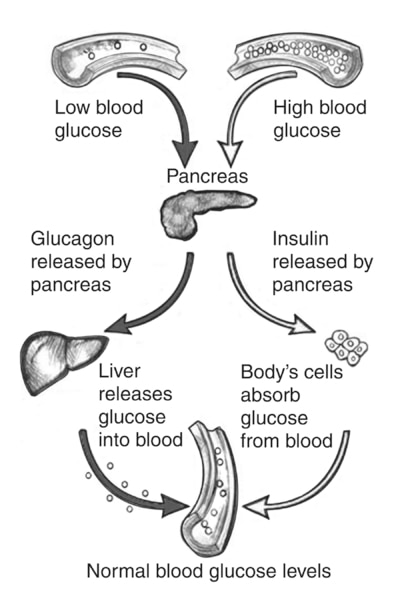
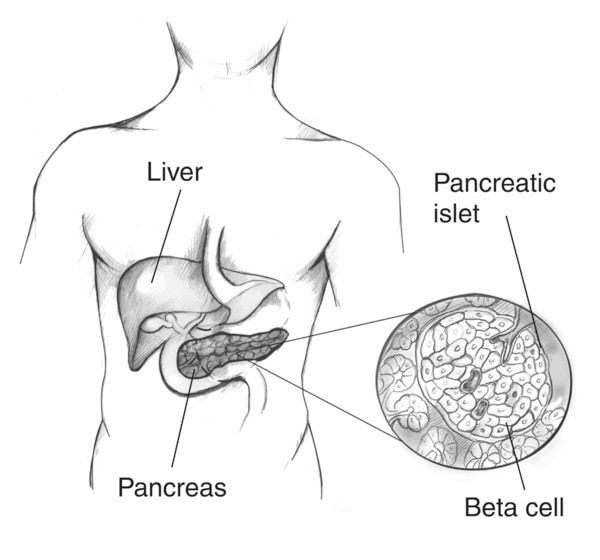
Fed–Fasting–Stress Metabolic Switch
Choose the physiologic state to see which hormones and pathways dominate.
Storage predominates
Insulin promotes glucose uptake in muscle and fat, suppresses hepatic glucose output, supports protein synthesis, and inhibits lipolysis and ketogenesis.
Anesthesia connection: Fasting and medication effects can outlast the meal state, so verify glucose and medication timing rather than assuming normal storage physiology.
Insulin-Driven Potassium Shift
Increase insulin effect to move potassium from plasma into cells. The model shows redistribution—not potassium removal.
Moderate intracellular shift
Insulin stimulates Na⁺/K⁺-ATPase activity and lowers serum potassium by moving K⁺ into cells.
Safety point: In DKA, total body potassium may already be depleted, so insulin can unmask dangerous hypokalemia.
DKA vs HHS Visual Comparator
Toggle the emergency to compare its defining physiologic load.
DKA: ketone-driven acidemia
Severe insulin deficiency permits lipolysis and ketogenesis. Kussmaul respirations and fruity breath reflect the acid load.
Resuscitation emphasis: Fluids, potassium/electrolyte planning, then insulin with frequent reassessment.